
Sugar-Free Mithai Calories: How to Read a Diwali Sweet Label
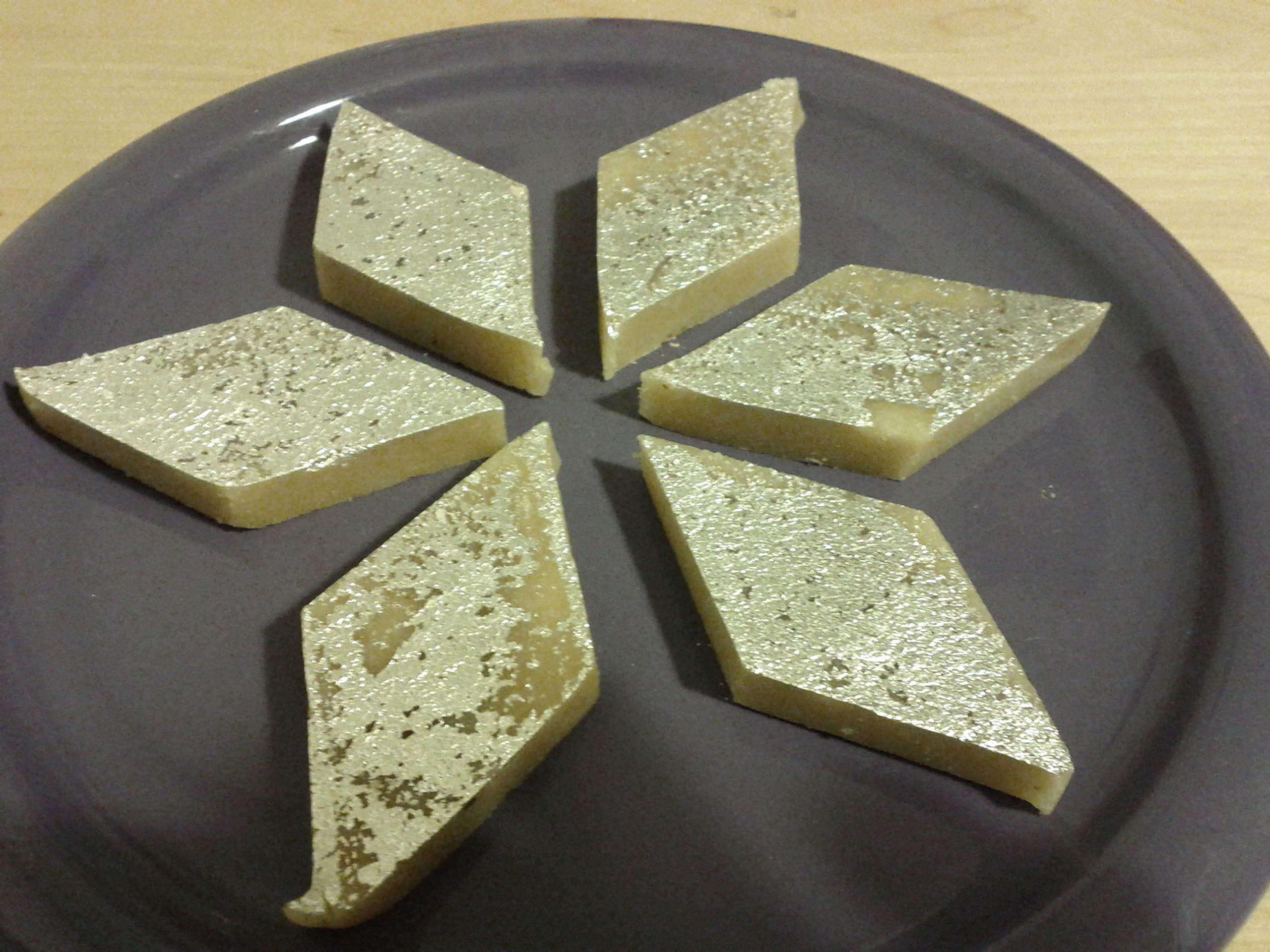 Photo: Unknomics
Archive photograph of kaju katli by Unknomics, CC BY-SA 3.0. Cropped for display. Product examples use the manufacturers’ listings.

Sugar-free mithai can still have calories. For one real example, the maker of Artinci’s Diwali gift box lists 105.4 kcal for 30 g of its kaju katli. Your piece might weigh more or less. Flip the dabba over, find the grams behind the energy number, then use the weight of the portion you actually take. Artinci’s product listing.
Diwali fell on 8 November in the 2026 CGCA holiday calendar. If two gift boxes are still open on the dining table, the quickest way to make sense of them is to pair each sweet with its own panel. The front tells you which claim the maker is highlighting. The back gives you the information for your portion.
Read the energy number and its unit together
Start with the exact sweet. A mixed box can have one panel for kaju katli and another for laddu. Take a photo that includes the product name and the whole nutrition panel. That way, when someone moves the remaining pieces into a dabba, you can still tell which number goes with which sweet.
| Find | Write down | Use it for |
|---|---|---|
| Product name | The sweet and recipe variant | Match the correct panel in a mixed box |
| Energy and basis | kcal per 100 g or per stated serving | Scale the energy value to your portion |
| Serving weight | The grams associated with the serving | Work out the fraction of a labelled serving you took |
| Ingredients and allergens | The ingredients and any allergen statement on the pack | Check what is in the sweet before you choose or offer it |
A serving on the label is the amount the manufacturer uses to report nutrition. Your portion is the amount you choose. If the panel says “one piece, 20 g”, a piece from a different box can have a different weight and recipe. NIDDK’s guide to portions and servings.
The number on the panel belongs to the grams beside it.
Two real label examples, with the maths shown
Example 1. Artinci Kaju Katli in the Sugar Free Diwali Sweets Gift Box. The manufacturer lists 105.4 kcal per 30 g. If you weigh out 15 g, that is half the stated serving. Multiply 105.4 by 15 and divide by 30 to get 52.7 kcal, or about 53 kcal. The 15 g is an example weight. Use the actual pack if its figures differ from the web listing. Artinci product details.
Example 2. Bikaji Khajoor Dry Fruit Burfee. The manufacturer panel lists 432 kcal per 100 g and separately prints 90 kcal for its 20 g serving. If your slice weighs 25 g, using the per-100-g column gives 432 × 25 ÷ 100 = 108 kcal. At 20 g the same calculation gives about 86 kcal. The maker’s printed serving value is 90 kcal, so keep the method you used with the estimate. This is a date burfee example. The panel also declares added sugars, so check the panel when a search title suggests otherwise. Bikaji product page and nutrition panel.

These examples start with different reference weights. If you compare two boxes for shopping, take the same weight for both, such as 20 g, and scale each from its own panel. If you are recording what you ate, use the actual grams for each sweet, even when they differ. A quarter of one box tells you very little about a quarter of another unless you know the weight and the recipe.
Give the front claim and the nutrition panel separate jobs
You might see “sugar-free”, “no added sugar”, or “date-sweetened” while browsing Diwali sweets. Note the exact wording on the pack in your hand. For calories, read the energy line. For ingredients, read the ingredient list. For carbohydrates, read the line labelled total carbohydrate. A sweet can have energy from several ingredients, including fats and carbohydrates. In the Artinci example, the kaju katli listing includes cashew and reports both fat and carbohydrate. WHO’s healthy diet overview and the manufacturer’s listing.
Suppose someone in your family says, “Khajoor wali hai, bas.” Ask to see the box before treating that as an ingredient summary. The date burfee panel above is one reason to do that. If the label is for a different product or you only have a blurry screenshot, keep the uncertainty with the entry. When serving guests, retain the original packaging so they can read the ingredients and allergen statement for themselves.
Use the same method when a piece is cut in half
Set a small plate on the scale and tare it. Add the piece you plan to eat. For a second helping from the same box, weigh the extra piece and add the two weights. If you switch sweets, keep a separate line for each. Pieces cut by hand may have unequal sizes, so weighing both halves can be useful when you and a cousin split one.
Say you took 15 g of the Artinci kaju katli and later another 9 g of the same sweet. Together that is 24 g, so 105.4 × 24 ÷ 30 is about 84 kcal. Both weights are illustrative. If you already keep a food record, you can record the sweet and portion with Coach Bhai. Keep the packet photo handy when you want to revisit the estimate.
What to record when the label is missing
For a loose sweet, ask the shop or the person who made it for the exact name and ingredients. If there is no usable panel or recipe, “one small piece of kaju katli, estimated” is a reasonable record of what you know. A scale can tell you the grams. The energy per gram still depends on the recipe.
If the box is open and you also have questions about the date or handling, solve those before planning portions. The Diwali gift-box storage guide has a worksheet for keeping those details together. For a family visit where weighing is impractical, choose a piece you want and jot down a simple description if tracking is useful to you.
Three common label mix-ups
- Reading the total box weight as a serving. Look for the grams beside the energy value. The pack’s net weight describes the contents of the box.
- Moving a brand number to a different recipe. “Kaju katli” is a useful food name. For a calorie estimate from a label, use the exact product you ate.
- Mixing a per-100-g value with a serving calculation. Start from one column and keep its denominator with it. When the label displays both, note the basis you chose.
FAQs
How many calories are in sugar-free mithai?
Use the energy value and serving weight for the exact sweet. Artinci lists 105.4 kcal per 30 g for the kaju katli in its Diwali gift box. A weighed 15 g portion of that product works out to about 53 kcal.
Can a date-based mithai still contain added sugar?
Yes. Read the exact ingredient list and nutrition panel. The manufacturer panel for Bikaji Khajoor Dry Fruit Burfee declares added sugars. A date-based recipe can vary from product to product.
What if the per-100-g and per-serving numbers differ?
Use one column consistently and record the basis. For Bikaji Khajoor Dry Fruit Burfee, 432 kcal per 100 g scales to about 86 kcal for 20 g, while the printed 20 g serving gives 90 kcal. Both are manufacturer label estimates.
How do I log half a mithai piece?
Weigh the piece you eat if possible. Multiply the label calories by your portion weight and divide by the weight used for that label value. For a piece without usable nutrition information, keep the estimate approximate.
Does the sugar-free claim tell me the total carbs?
Read the total carbohydrate line for that product. A front claim alone does not give the carbohydrate amount or tell you how your blood glucose will respond. Use your care team’s guidance for individual diabetes decisions.
Apni mithai ka portion yaad rakho
Use Coach Bhai to keep a meal record with the sweet, the amount you ate and a sensible estimate. Start with the product and portion you know.
Create your Coach Bhai account →Already a member? Log in karo.
Planning a wedding meal around an existing diabetes care plan? Take these wedding meal questions to your care team before the function.
Keep the name, the grams and the source together
Next time the box comes around, save three things if you want to track the sweet. Write the exact name, the portion in grams if you have it, and the energy basis from that label. Then enjoy the piece you chose.
Prepared by the Coach Bhai Editorial Team with AI assistance. Sources checked 9 November 2026. The examples use manufacturer data and illustrative weights. Follow your care team’s advice for individual diabetes management or other medical nutrition needs.