
Diwali Sweets Storage: A Gift-Box and Leftover Portion Plan
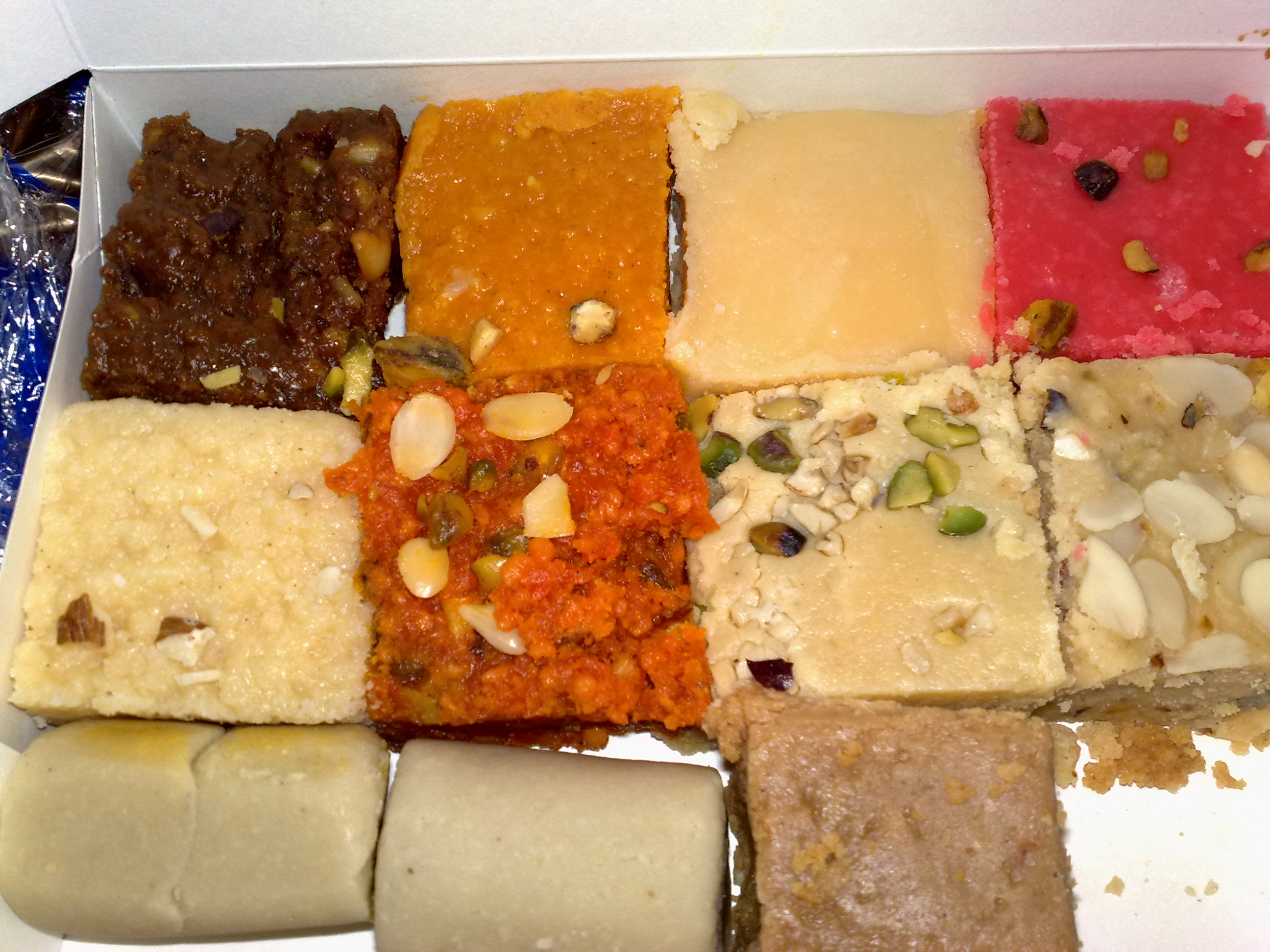 Photo: secretlondon123
Archive photograph: A box full of burfis by secretlondon123, CC BY-SA 2.0. Cropped for display; the original image file is unchanged. The photograph does not establish ingredients, freshness or storage conditions.
Diwali sweets storage starts with the box's actual instructions: identify the mithai, keep its label, check the relevant dates and put it in the storage conditions the maker specifies. Then decide what to serve or share. Ek aur piece kha lena is not a storage plan, and every gift box does not belong on the same timetable.
The 2026 Diwali holiday fell on 8 November in the CGCA holiday calendar, with celebrations varying by household. If gift boxes are still on the counter, a short inventory helps you enjoy favourites without feeling responsible for finishing every gift yourself. This guide is about storage decisions and portions; our mithai calorie guide covers the separate question of estimating what is on your plate.
Sort the gift boxes before choosing portions
Start with the information you have, rather than how expensive or beautifully wrapped the box looks. Keep separate boxes identifiable. If you empty everything into one big dabba, it becomes harder to remember which product needs which handling or which label belongs to which sweet.
FSSAI's guidance on traditional milk products explains that sweets have different shelf lives and that ingredients matter. Its examples are not permission to assign a generic deadline to an unidentified sweet at home. Use the actual product information and ask the seller where details are missing.
The following is an original sorting worksheet, not a shelf-life chart. It deliberately leaves out a universal number of days.
| Box in front of you | Record now | Next action |
|---|---|---|
| Milk-based mithai | Exact product, date received, maker's date information and storage instructions | Follow its specified storage conditions; do not invent a room-temperature allowance |
| Factory-sealed dry snack | Product name, seal condition, printed date and instructions after opening | Keep the label with the product and note when you open it |
| Unlabelled gift box | Who can identify the seller, preparation details and handling history? | Resolve the missing information before sharing or planning portions |
A dry-looking sweet is not automatically interchangeable with a sealed packet snack. A mixed assortment also does not establish that all its pieces have the same ingredients or storage needs. If one component needs different handling, ask how the assortment should be managed.
The date a box reached your home is useful information. It is not a new manufacturing date.
Make one inventory everyone at home can understand
A paper note on the fridge works. Give each box a simple name and retain a photo of its label if the outer wrapping is going away. Write the date received separately from any manufacturing, opening or printed date. If something is unknown, write “unknown” rather than filling the gap with a guess.
- Identity: maker or shop, exact product and contact details where available.
- Dates: what the packet actually says, when it arrived and when it was opened.
- Handling: the storage instruction and what you know about the journey to your home.
- Decision: what information is still needed, where the food belongs and who will follow up.
For example, a household could write: “Box A, received tonight; product identified; label photographed; follow printed refrigeration instructions.” Another entry might say: “Box B, homemade gift; recipe and preparation date not yet confirmed; ask the sender.” These are fictional note formats, not an assessment that either real box is safe.
If several people unpack gifts, ask one person to keep the notes together. Otherwise someone may put a box in the fridge while another assumes it was only just delivered. A shared note helps prevent that confusion without turning the evening into a food audit.
Check handling history before relying on the fridge
Move food that requires refrigeration into appropriate storage promptly, following its instructions. Use clean, covered containers if transferring it, and keep the product information attached to the new container. The WHO Five Keys to Safer Food puts hygiene and temperature control alongside other safe-handling practices.
The fridge is a storage tool, not an explanation of what happened before a box arrived. Ask about a long journey, an opened package or time spent outside the required conditions when those details are unclear. Do not use a calendar plan to wave away missing handling information.
Do not taste a doubtful sweet to test it. The FDA's food-storage guidance notes that food can cause illness even when it does not look, smell or taste spoiled. If safety remains uncertain, do not eat or pass on that food. A normal-looking surface is not a safety certificate.
Similarly, do not assume freezing automatically fixes a questionable box or gives every mithai the same storage life. If you want to freeze a particular product, get suitable product-specific directions first. This article does not supply a blanket freezing or thawing method for Indian sweets.
Portion mithai after the storage question is settled
Once food is suitable to eat and its storage arrangements are understood, choose what you would actually enjoy. Serve that portion on a plate and put the remainder back under its required conditions. Keeping a whole open box next to the sofa can make it difficult to remember how much you have had.
For a purely illustrative quantity example, 500 g divided into 25 g portions gives 20 portions. That arithmetic does not mean the product is safe for 20 days, that 25 g is your recommended serving, or that you must create 20 identical packets. It only shows how a box weight can be separated from the amount someone chooses to eat.
Weigh the food itself when a weight is useful; do not include the box, dividers or container. If piece sizes vary, “two pieces” will not necessarily describe the same weight on two different days. You can also share a piece because you want a taste, without claiming that every sweet has one standard size.
The NIDDK portions guide distinguishes a chosen portion from a serving printed on a nutrition label. If you record calories, use the exact product's nutrition information and the amount eaten. An unidentified halwai sweet needs an approximate entry unless its recipe and yield are known; a photograph does not supply those missing ingredients.
Create a Coach Bhai account if you want a personal meal record that includes festive sweets. Log what you actually eat, including a second serving, rather than treating the entire gift box as today's portion.
Share the product information along with the food
Sharing can be a practical choice when food is suitable to share and someone wants it. Ask first. Pass on the maker's name, ingredient information, relevant dates and storage instructions, not just a smaller unmarked dabba. Keep different products identifiable if they need different handling.
A simple message could be: “We have this mithai from this shop. These are the label and storage details. Would you like some, and can it reach you under those conditions?” This is an original communication example, not a guarantee that a delivery or product is safe.
Do not send doubtful leftovers to colleagues, neighbours or a donation point to avoid throwing them away. If donating, contact the recipient organisation about what it accepts and its handling arrangements before preparing a parcel. Its ability to receive food is not something you can infer from a general festival checklist.
Let the receiver decide whether the food suits their needs. If ingredients are unclear, say so. A nut garnish, a dairy ingredient or a mixed assortment should not disappear from the conversation when the outer box is removed.
Common gift-box mistakes to avoid
- Using “received today” as the only date. Keep the actual maker's dates and opening information too.
- Mixing several boxes into one unlabelled container. Preserve each product's identity and directions.
- Assuming refrigeration erases earlier uncertainty. Check handling history before deciding what can be used.
- Finishing sweets quickly to avoid waste. Decide on suitable storage and willing recipients first; nobody has to eat a whole box.
- Skipping tomorrow's meals because tonight included mithai. Keep your ordinary meals available and record the sweet as part of the evening.
For tomorrow's hosting leftovers and ingredient notes, our vegetarian Diwali dinner guide covers the meal itself. Food taken on a commute needs its own handling plan; the tiffin hygiene guide explains the practical questions to consider.
FAQs
How long can I keep Diwali sweets?
Use the exact product and its maker's storage and date information. Ingredients, preparation, packaging and handling differ, so there is no single shelf life for every Diwali sweet. This guide does not assign a universal number of days.
Should every mithai box go in the fridge?
Follow the storage conditions specified for that product. Keep different products identifiable and ask the maker if instructions are unclear. Refrigeration does not resolve an unknown handling history.
What should I ask about an unlabelled gift box?
Ask who made it, what the products and ingredients are, when they were prepared, how they have been handled and what storage and date instructions apply. Do not invent missing details before serving or sharing it.
Does a sweet looking and smelling normal prove it is safe?
No. Food can cause illness without looking, smelling or tasting spoiled. Do not taste doubtful food to test it, and do not eat or share food whose safety remains uncertain.
Does a 500 g box divided into 25 g portions last for 20 days?
No. The calculation gives 20 portions, not 20 safe storage days or a recommended serving size. Product safety and storage must be established separately before deciding portions.
Mithai enjoy karo. Apna portion yaad rakho.
Keep your festive meal record with Coach Bhai. Include the sweets you chose and the refills you enjoyed, using honest estimates. The app records meals; product storage and safety still need reliable information.
Create your Coach Bhai account →Already a member? Log in karo.
Leave tomorrow a clear note, not a mystery dabba
Keep labels, ask the missing questions and make storage decisions before portion decisions. Enjoy the mithai you want when it is suitable to eat. A clear inventory helps the next person opening the fridge understand what is there without being pressured to finish it.
Prepared by the Coach Bhai Editorial Team with AI assistance. Sources checked 9 November 2026. General food-handling and portion-planning information; not a product safety assessment or personalised medical diet. Worksheet entries and quantity examples are illustrative. No universal mithai shelf life or precise calorie estimate is claimed.